


You have picked the perfect psychological thriller, lit the candles, and poured the wine. Then your book club starts talking, and within ten minutes someone says, “The twist was obvious,” and the evening deflates. That is the strange problem with thrillers: once the secret is out, plot recap has nowhere to go. The fix is not a stricter no-spoilers rule. It is designing your book club night around character motive and moral judgement instead of solving the puzzle all over again.
This guide is a practical host’s playbook for beginners. You will learn why most psychological thriller book clubs fall flat, how to decide what your night is actually for, how to set a spoiler protocol and ground rules that ban simple like or dislike, and how to ask character-first and passage-based questions. We will also cover index cards, small teams, props, a sample two-hour running order, and how to choose books that debate well. By the end, you will be ready to close with the question that splits the room: was the narrator ever innocent?
Why Most Psychological Thriller Book Clubs Fall Flat
A psychological thriller runs on a secret. Once your group confirms who did what, the conversation is over. Most clubs default to plot recap, exhaust the conversation in a single opening exchange, and then talk about dinner.
Then comes the “solved it on page 60” problem. Fast readers spoil, slower readers go quiet, and the night becomes a competition about who guessed first. As Priya Parker argues in The Art of Gathering, quoted by the ALA, “The art of gathering begins with a purpose: When should we gather? And why?” A thriller night with no declared purpose defaults to recap.
Plot is finite. Motive and moral judgement are not. Two readers can agree completely on what happened and still argue for an hour about whether the narrator was ever innocent.
Genre-specific hosting advice is thin. Library guidance covers facilitation in general, and most ready-made book club question lists tend to treat genre fiction as an afterthought. Even a sharp psychological thriller gets reduced to a quiz. Thriller hosts end up improvising. This playbook is the framework that is missing.
Step 1: Decide What Your Book Club Night Is Actually For
Here is how to set that purpose in ten minutes, before anything else.
Write one sentence before you send anything. Not “discuss the book”, but something arguable: “decide whether we would have done what she did.” That one line separates a book club from a chat.
Match it to the book’s moral pressure point. A revenge story and a novel about a psychiatrist with something to hide raise different questions, so read with your purpose in mind and adjust if the book pushes somewhere else.
Put it in the invitation. Guests who arrive knowing they are there to argue rather than summarise start productively instead of easing in for twenty minutes.
Choose your format. Debate, confession circle, or verdict. A verdict night suits thrillers: vote at the end, write the decision down, and the evening gains shape and a natural finish.
Never build the purpose on plot. If the goal is “work out who did it”, the night collapses the second one member has finished and the others have not.
Step 2: Prepare Early and Agree a Spoiler Protocol
Good purpose needs groundwork. Erin Collazo Miller’s guide to leading a book club discussion advises finishing the book early and preparing your questions in advance. Hosting goes badly when you are still reading on the day.
Then settle spoilers before anyone arrives. State a safe-to-discuss point in the invitation, or run a two-tier evening: a spoiler-free first hour, followed by an anything-goes second half. This one agreement buys more group trust than any icebreaker.
Hand out a one-page sheet listing the main characters and summarising the plot in a paragraph. It works as a memory refresher rather than a re-telling, and it quietly rescues whoever read the book three weeks ago.
Prepare eight to ten open-ended questions, then expect to use only some of them. A deep bench of prompts is the cheapest insurance against a stalled discussion.
Finally, plan for the member who has not finished. Pair them with someone who has, or give them a defined role, such as tracking how the narrator’s story shifts between chapters. They still contribute, and nobody feels shamed.
Step 3: Set Ground Rules That Ban Like and Dislike
Your spoiler boundary is set and your questions are ready. Now give the evening its rules, and say them out loud before anyone opens the book.
The ALA’s guidance steers participants away from “like” or “dislike,” framing those terms as unhelpful for moving discussion forward and likely to put someone on the defensive about a novel they enjoyed. So replace a rating with a reaction: “I found her cold” becomes “I felt uneasy every time she was on the page, and here’s the passage that did it.” The second version invites a reply. The first invites a shrug.
Read the rules aloud at the start, together. Ground rules only work when everyone hears them at once, and they give you a neutral way to redirect someone later.
Name the usual suspects in advance: the interrupter, the mic hog, the meanie. The ALA links to guidance on dealing with disruptive behaviour, so mention these types lightly and agree on a friendly signal for cutting in.
Keep the framing positive. You aren’t policing taste. You’re keeping everyone describing motive, choice and consequence instead of ranking books out of five.
Rules set. Now you can talk motive.
Step 4: Ask Character-First Questions Instead of Plot Questions
Now the questions themselves. The ALA’s guidance is refreshingly simple: choose a primary character and ask members to comment on their traits and motivations, and on how those affect the story’s events and the other characters. That single instruction is the whole method.
Swap “What did you think of the ending?” for “What did she want in chapter one, and did she get it?” The second question cannot be answered with a plot summary.
Then run a motive ladder: what does she say she wants, what does the group think she actually wants, and what does the book show her doing. The gaps between those three answers are where the argument lives.
Ask about second-tier characters too. In psychological thriller books, the friend, the neighbour or the therapist often carries the moral weight, and readers notice more about them than they realise.
Finally, keep a visible list of moments when a character had a genuine choice. Build it on a whiteboard or a shared note as the group talks. It becomes your debate map for the closing question.
Step 5: Use Passage-Based Prompts to Slow the Group Down
Another ALA-endorsed method slows that character work down to the sentence level. Ask everyone to bring one marked line to the night. Reading it aloud shifts the room from opinion to evidence, and it hands quieter guests a script they already wrote at home. If someone arrives empty-handed, keep two spare passages tucked inside your own copy.
Then pair each passage with one question, not three. “What is she telling herself here?” lands far better than a five-part prompt that everyone forgets halfway through.
Unreliable narration gives you the richest anchors. The sentence a reader trusted on page 30 and doubts on page 300 is the most productive sentence in the book.
Passage work also defuses the spoiler problem: discussion stays inside a single moment instead of racing towards the reveal. Next, let’s look at the mechanics that keep that momentum going.
Step 6: Run the Room With Index Cards, Small Teams and Props
Index cards are your practical engine for all of this. For a quiet group, go with small teams of two or three. Give each team a single card and a few minutes, then take answers one team at a time. Everyone has spoken before the debate even starts.
Props help too. The ALA endorses story-related objects such as maps, photographs, paintings, food, apparel, music or a film sequence, and calls it “adult show and tell.” One relevant object on the table changes the tone of a room.
A literary icebreaker loosens everyone up first, which matters most with a group who mostly know each other online. Ten minutes of a bookish game tends to pay for itself.
Finally, keep an eye on the clock. A visible timer is the kindest tool a host has, because it stops one strong voice from swallowing the evening.
Then you can close on the question nobody can settle.
Step 7: Close With the Question That Splits the Room: Was the Narrator Ever Innocent?
The timer stops, the cards go down, and you close with one question: was the narrator ever innocent? Not whether she is guilty, but whether you were ever meant to believe her. Treat this as a host prompt, not a research finding. It works because no plot fact can settle it, so two people who read the same pages land in different places, as any narrator whose account shifts as the pages turn will demonstrate.

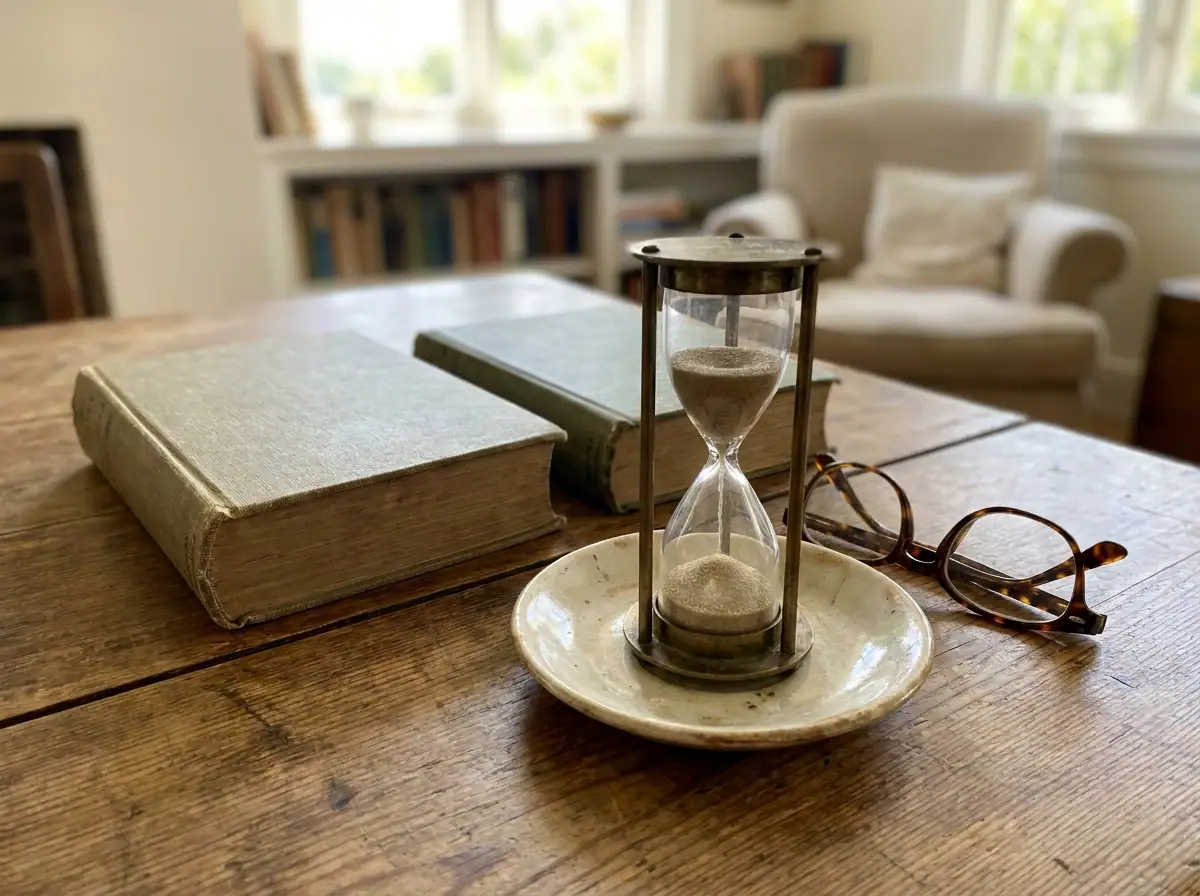
Then run it as a physical vote. Everyone stands on one side of the room and moves if they change their mind. Visible movement makes the argument feel like an event rather than a discussion.
Ask each side to name the moment that decided them. This converts opinion into textual evidence and rewards members who marked their passages.
Finish on moral judgement instead: was the ending just, and would you have made the same choice? The best psychological thrillers leave that argument open. If everyone goes home still debating, the night worked.
A Sample Running Order for a Two-Hour Thriller Book Club Night
With your closing debate planned, all that’s left is giving the night a shape. Treat these timings as a template, not a standard.
0:00 to 0:15: Arrivals and an icebreaker. Play a quick literary game to loosen the group up, as the ALA suggests. No book talk yet. Nobody has to perform.
0:15 to 0:25: Purpose and ground rules. Read your one-sentence purpose aloud and confirm the spoiler boundary.
0:25 to 1:05: The character-first round. Write one character per index card. Teams of two or three take a card, get five minutes each, then report back.
1:05 to 1:25: The passage round. Each member reads their marked line aloud and answers one question about what it reveals.
1:25 to 1:50: The closing debate. Run the physical vote on whether the narrator was ever innocent.
1:50 to 2:00: Choose the next book. Vote and set the date while everyone is still in the room, before the momentum walks out the door.
Run it once and the structure does the hosting for you.
How to Choose Psychological Thriller Books That Debate Well
That running order only works if the book can fill it. Choose badly and the night collapses into plot recap by 0:40.
Look for three things: a first-person narrator with something to hide, a moral dilemma with no clean answer, and at least one relationship worth twenty minutes of argument. Avoid novels where the twist is the entire pleasure. If the only question it generates is “did you guess it?”, it won’t carry a full book club night.
So is Miranda Rijks: The Visitors, Make Her Pay, The House Swap and The Psychiatrist all turn on a narrator whose account of events is the thing under examination, and each comes with book club questions written to push past plot recap. Signed copies, short story collections like GASPS, and newsletter free novellas let you test a pick cheaply.
Finally, build a shortlist of three or four psychological thriller books and let the group vote. Choosing together is its own icebreaker and gives next month’s host a running start. Check what’s coming next before you lock in your pick.
Conclusion: Plan Your Next Book Club Night Around Motive
Whichever book your group votes for, the formula stays the same. Declare your purpose before you send a single invitation, state your spoiler boundary in the same message, and draft your questions days early, not on the afternoon of the meet. Send everyone home with book club questions ready for your next psychological thriller pick. The evening that ends mid-argument is the one everyone comes back for.